
The Small Self
Learning to Say Amen

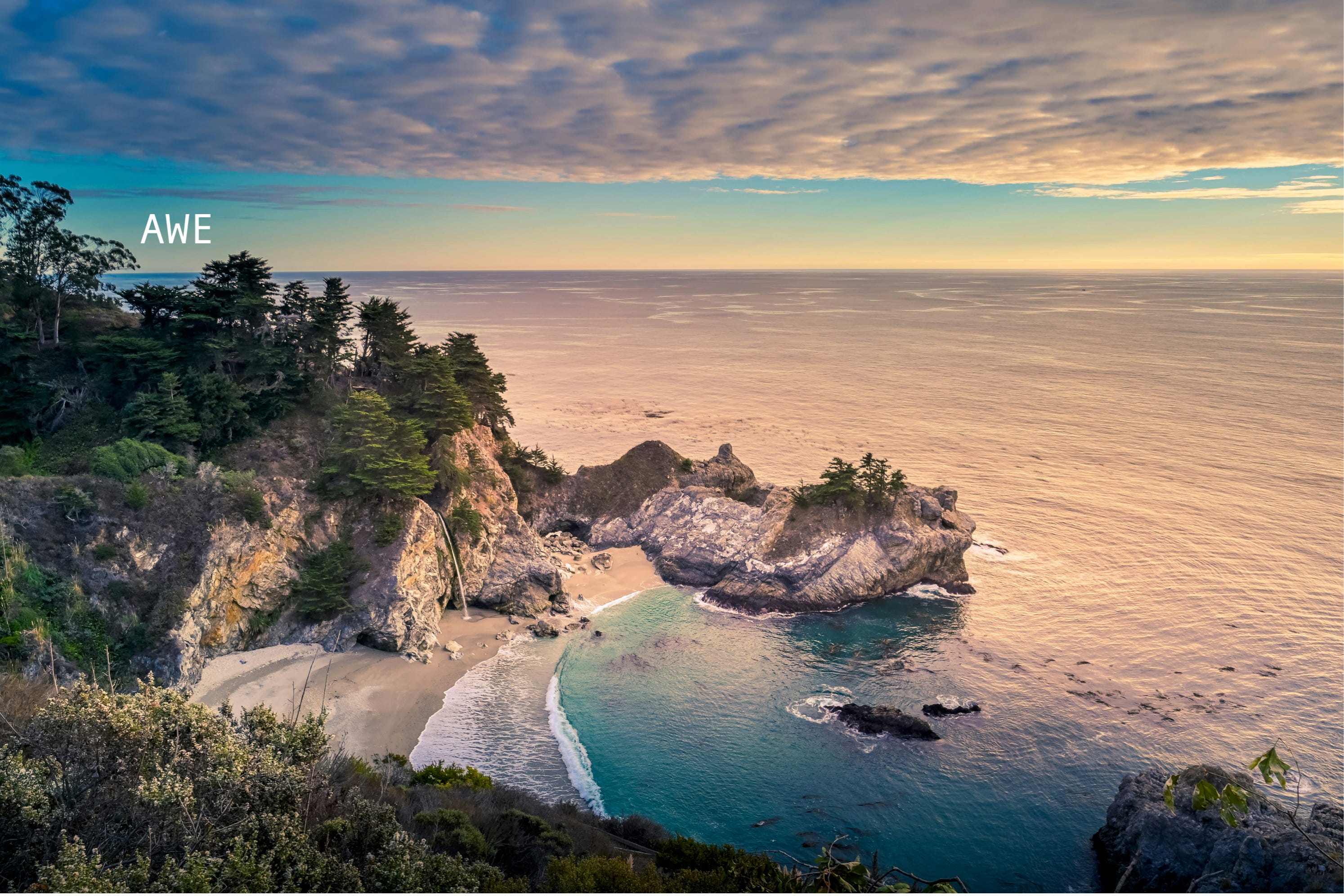
Word: Awe
“It was here in Big Sur that I first learned to say amen.”
— Henry Miller
Long before I ever saw Big Sur, I read Henry Miller’s Big Sur and the Oranges of Hieronymus Bosch, along with nearly everything else he wrote.
The title alone felt like a portal. It sounded less like a travel memoir than a fever dream assembled by a mystic, a poet, and a runaway monk sharing the same typewriter. Miller arrived in Big Sur in 1944 and remained there for nearly two decades, treating the place less like a destination than a form of salvation. He wrote about it with a reverence usually reserved for scripture. The cliffs. The redwoods. The Pacific. The isolation. He described Big Sur as “the face of the earth as the Creator intended it to look.” Elsewhere he wrote that it was there he first learned to say amen.
At the time, I wasn’t entirely sure what he meant. How different could one stretch of California coastline be from another? I had grown up in Southern California surrounded by beaches, cliffs, surf, sunshine, and the mythology of endless summer. California was California, or so I thought.
As it turns out, Big Sur belongs to an entirely different kingdom. The Central Coast feels less like an extension of Southern California than a separate country sharing the same map. The pace slows. The scale expands. The mountains plunge directly into the sea. The coastline remains largely untamed. Southern California often feels designed around human ambition. Big Sur feels indifferent to it. The land has not been conquered so much as negotiated with. Standing there, you begin to understand why Miller spent twenty years trying to describe it and still seemed convinced that language was inadequate to the task.
I understood the words. I admired the sentences. Miller possessed that rare ability to make landscape feel alive, as if the terrain itself were participating in the story. Yet there remained a distance between his experience and my understanding. I had read the book, but I had not yet stood where he stood. I had not yet watched the Pacific hurl itself against those cliffs or listened to the silence that seemed to exist underneath the wind.
Years later, I left Monterey on a bicycle and headed south.
The route began innocently enough. The manicured perfection of Pebble Beach gave way to Carmel, where tourists drifted between galleries, cafés, and courtyards overflowing with bougainvillea. The roads still belonged to the familiar world. Civilization remained close at hand. Then, at the southern edge of town, I made the right turn onto Highway 1 and everything began to change.
The houses vanished and the horizon widened until the Pacific occupied the entire western edge of my vision. Even the smell changed. The air carried salt, kelp, cypress, and something harder to name, a scent that felt less like the ocean and more like the threshold of another world.
Almost immediately Point Lobos appeared ahead, its rocky coves and wind-sculpted cypress trees jutting away from the sea like fragments of some older California that had somehow escaped modernity. Beyond Lobos, the road began tracing the edge of the continent itself. Carmel Highlands emerged from the cliffs, suspended improbably between mountain and ocean. Every mile seemed to peel away another layer of ordinary life.
The morning could not have been scripted more perfectly.
The Pacific carried streaks of impossible blue. Not the steel-gray palette often associated with Northern California, but something brighter, almost tropical in places, as though fragments of the Bahamas had drifted north on the current. Whitecaps softly stitched themselves across the surface beneath a gentle onshore breeze. Kelp forests floated offshore like dark brushstrokes painted onto glass. The cypress trees leaned inland, shaped by decades of negotiation with wind and salt.
The road rose steadily toward Hurricane Point.
There the coastline suddenly revealed itself in full scale.
The view opened like a curtain.
To the north stood Point Lobos and Carmel fading into the distance. Ahead, Bixby Creek Bridge stretched across its canyon in a graceful concrete arc, one of the most photographed structures in America and somehow still incapable of being captured accurately by photographs. Beyond it, the coastline folded endlessly into itself, ridge after ridge dissolving into atmospheric blue. The Pacific stretched westward beyond imagination. The Santa Lucia Mountains rose sharply behind me. Standing there felt less like observing a landscape than entering one.
I continued south.
Across Bixby Bridge.
Past Rocky Creek.
Past the sea caves and hidden coves beneath the cliffs.
Past Garrapata’s rugged slopes spilling toward the water.
Past the long succession of ridges, canyons, and overlooks that have convinced generations of writers, artists, photographers, surfers, wanderers, and seekers that geography itself can possess spiritual properties.
The miles rolled beneath my wheels.
The road climbed and descended in long rhythmic arcs. The ocean remained to my right. The mountains remained to my left. Somewhere beyond the next rise stood Nepenthe, perched high above the Pacific like a refuge suspended between earth and sky. Farther south, the road entered the heart of Big Sur itself. Redwoods gathered along the Big Sur River. Pfeiffer Big Sur State Park appeared beneath their canopy. The famous Pfeiffer Beach lay hidden beyond the ridges, its purple sand and sea arches concealed from passing travelers. Miller’s country was now all around me.
Every turn revealed another version of the impossible.
As the ride unfolded, something curious began happening.
The ordinary machinery of self-concern slowly loosened its grip.
The constant narration that normally accompanies modern life began fading into the background. The running inventory of obligations. The unfinished conversations. The deadlines. The anxieties. The invisible negotiations between past regrets and future uncertainties. None of those concerns vanished entirely. They simply stopped occupying center stage.
The landscape had become too large.
Nothing had been solved.
Nothing had fundamentally changed.
Yet something inside me had shifted.
I felt smaller.
And strangely, better.
Miller once wrote that Big Sur engendered a humility and reverence not frequently encountered in Americans. Looking back now, I think that was precisely what I was experiencing. Not humiliation. Not insignificance. Something far more nourishing.
Perspective.
The cliffs did not care who I was.
The ocean did not care what I had accomplished.
The redwoods had been standing there for centuries before my arrival and would likely remain centuries after my departure.
For reasons I could not have articulated at the time, this realization felt liberating rather than threatening.
The modern world spends enormous energy convincing us that we are the center of the story. Big Sur suggested otherwise. The coastline did not diminish me. It relieved me of the exhausting responsibility of being the main character.
For a few hours I became part of something much larger than myself.
And together we will float into the mystic.
— Van Morrison
Years later, I would discover that a social psychologist at my alma mater, UC Irvine, named Paul Piff had spent much of his career trying to understand exactly this feeling.
For years I simply carried that ride with me.
I never thought of it as a psychological phenomenon. I didn’t analyze it or attempt to explain it. I filed it alongside a handful of experiences that felt important without fully understanding why. Certain surf sessions. Certain runs. Certain concerts. Certain conversations. Those rare moments when life suddenly appears more vivid than usual and the world seems to reveal an additional layer of itself.
Years later, I found myself reading the work of Dr. Paul Piff, a social psychologist at the University of California, Irvine, my alma mater. Piff had devoted much of his career to studying a feeling that poets, philosophers, mystics, artists, and religious traditions had described for centuries but that modern science had only recently begun examining seriously.
The feeling was awe.
Piff defines awe as the emotional response that occurs when we encounter something so vast that it exceeds our existing mental framework. Something about the experience resists easy categorization. The mind is forced to expand its understanding in order to accommodate what it has encountered. The trigger can be natural, artistic, spiritual, intellectual, or even interpersonal. A mountain range. A star-filled sky. The birth of a child. A symphony. A great work of art. The ocean stretching beyond the horizon. Big Sur.
What fascinated Piff was not simply that awe feels pleasant. Scientists have spent decades cataloging positive emotions. Awe appeared to be doing something deeper. It seemed capable of altering the relationship between the self and the world.
In study after study, Piff and his colleagues found that people who experienced awe often became more generous, more cooperative, more connected to others, and less consumed by their own immediate concerns. They became more willing to help strangers. More willing to contribute to a collective good. More aware that they belonged to something larger than themselves.
Among his most intriguing findings was a concept he called the “small self.”
At first glance the phrase sounds almost insulting, as though the individual is somehow diminished. Piff meant something entirely different. Participants who experienced awe frequently reported feeling smaller in relation to the world around them, yet they did not feel weakened. They did not feel insignificant. Quite the opposite. Many reported feeling more connected, more grounded, more alive, and more meaningfully situated within a larger reality.
That description stopped me cold.
It sounded remarkably familiar.
It sounded like Hurricane Point.
It sounded like standing above the Pacific while the coastline folded endlessly into the distance and ridge after ridge disappeared into the blue horizon. It sounded like the moment the landscape became too vast for my concerns to remain at the center of the story.
The modern world often encourages us to pursue fulfillment through self-expansion. We are told to build our profile, increase our visibility, amplify our voice, strengthen our identity, and curate a personal narrative. Yet Piff’s work suggested that some of our most meaningful experiences arise through an entirely different mechanism. They arrive not by enlarging the self but by temporarily loosening its grip.
The distinction feels important.
Awe does not erase individuality. It recalibrates it.
For a brief period, the self stops occupying the center of the universe and becomes part of a larger field of relationships. The mountain remains a mountain. The ocean remains an ocean. The stars remain unimaginably distant. What changes is our perspective. We remember our place within the larger arrangement.
Reading Piff’s research, I kept returning to Henry Miller.
Decades before psychologists began measuring awe in laboratories and field studies, Miller had already arrived at a similar conclusion through experience. He spent nearly twenty years among the cliffs, rivers, redwoods, and solitude of Big Sur trying to articulate what the place was doing to him. Eventually he settled on a remarkably simple observation. Big Sur had taught him to say amen.
Years before Paul Piff would call it awe, Henry Miller simply called it amen.
The poet experienced it. The scientist measured it. Both were pointing toward the same mystery. Certain encounters with the world have the power to shrink us in exactly the way we need to be shrunk. Not toward insignificance, but toward perspective. Not toward disappearance, but toward belonging.
As I read deeper into Piff’s work, I began recognizing traces of this phenomenon throughout the lives of many people who had already appeared in these pages. Steve Prefontaine found something like it in total expenditure and complete commitment to the race unfolding beneath him. Bill Walton discovered it through gratitude, teamwork, and his lifelong devotion to something larger than individual achievement. Mark Allen found it through surrender, through releasing his attachment to struggle and entering a deeper rhythm. Colin Finlay found it through witnessing the lives of others and learning how attention itself can become a form of reverence.
Different lives. Different disciplines. Different circumstances.
Yet each, in his own way, stepped beyond the confines of the isolated self and entered something larger.
The question that follows is unavoidable.
Once we experience that larger belonging, what do we do with it? Once the self is no longer the sole object of our concern, where does our attention go next? What deserves our commitment? What deserves our service? What deserves our devotion?
Those questions lead directly into the next act of this story…
This is an interlude chapter of my book entitled The Space Between.
#TheSpaceBetween #BigSur #HenryMiller #PaulPiff #Awe
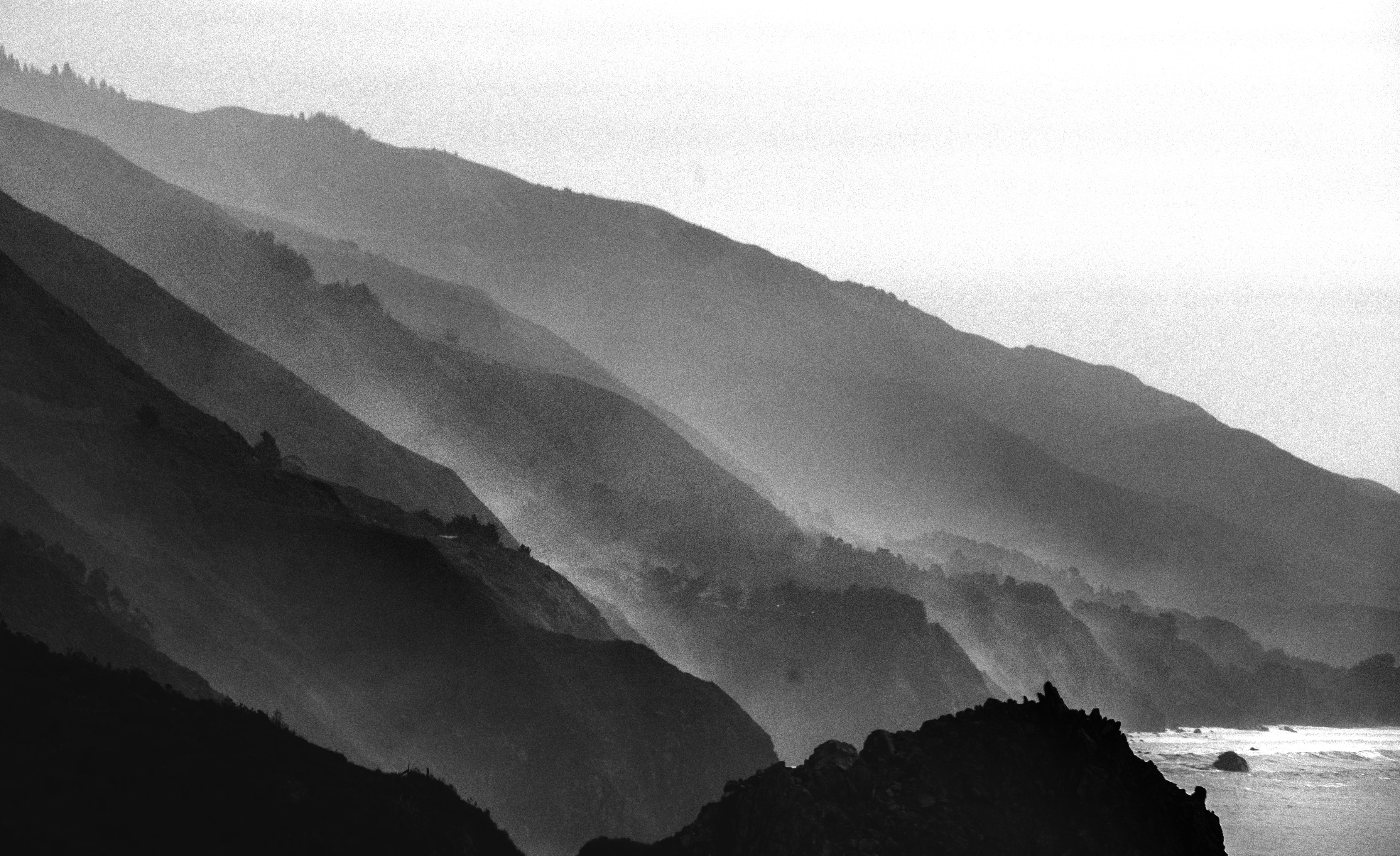
Next week we're taking a family trip down Big Sur. It will be our first time driving the fully reopened coast since dropping our daughter off at college four years ago.
The trip brings back memories of taking the train to Salinas with my dad, then riding our bikes down the coast and sleeping on bluffs overlooking the ocean. He always avoided the tourist spots, and some of our best meals were shared with local farmers outside Santa Maria after nights spent sleeping in the bushes along the coast.
I also remember hearing tales about how brutal the old February editions of the Tour of California could be along this stretch of Highway 1—cold rain, strong winds, battling the elements.
Looking forward to sharing one of my favorite places in California with my family.
Amen.