

CHOOSE THE HARD WAY
When Belief Becomes Behavior

Word: Commitment
“The impediment to action advances action. What stands in the way becomes the way.”
Marcus Aurelius
“The obstacle in the path becomes the path. Never forget, within every obstacle is an opportunity to improve our condition.”
Ryan Holiday, The Obstacle Is the Way
“Earn Your Turns.”
The Velominati, Rule #55
Every culture has its sacred texts. Some are carved into stone, some preserved in scripture, and some whispered around campfires until no one remembers who first spoke the words. They become less about information than formation, shaping the people who inherit them.
Cyclists have their own.
It is called The Velominati, though most people simply refer to it as The Rules. Part manifesto, part satire, part field guide, it reads like the proceedings of a gathering between Stoic philosophers, Belgian hard men, medieval monks, and comedians who all happened to arrive on bicycles. The tone is intentionally exaggerated, delivered with absolute seriousness and a knowing wink. It is impossible to read without smiling, yet equally impossible to spend enough years on a bicycle without realizing there is genuine wisdom hiding beneath the absurdity.
Rule #1: Obey the Rules.
Rule #2: Lead by example.
Rule #3: Guide the uninitiated.
Rule #5: Harden the Fuck Up.
Rule #9: If you are out riding in bad weather, it means you are a badass. Period.
Rule #10: It never gets easier. You just go faster.
Rule #47: Drink Tripels, don’t ride triples.
Rule #55: Earn Your Turns.
Rule #67: Do your time in the wind.
Rule #90: Never get out of the big ring.
Taken literally, many of the rules are ridiculous, and that is part of their charm. Every cyclist knows there are moments when you shift into the small ring, hide from the rain, or cut a ride short. The Rules were never intended to describe cyclists as they are. They describe the riders they aspire to become. Beneath the humor lies something surprisingly ancient: the recognition that identity is formed not by grand declarations but by small, repeated acts of discipline.
Long before governments wrote constitutions, people wrote smaller ones for themselves. Knights lived by chivalry. Physicians took the Hippocratic Oath. Shaun Tomson distilled a life into twelve simple promises that begin with the words, “I will.” Families pass down sayings that become indistinguishable from law. Teams develop standards that matter far more than anything written in an employee handbook. Every enduring community eventually creates a code, not because people enjoy rules, but because they understand that the hardest battles are rarely fought against the world. They are fought against the quieter voice that is forever searching for an easier road.
Every craft seems to develop its own version of The Rules. Surfers have line-up etiquette that governs everything from priority to respect. Jazz musicians learn to serve the song before themselves. Climbers leave no trace. The military has its codes. Scouts have their oath. Restaurants develop rituals that never appear on the menu. Families inherit sayings that eventually become indistinguishable from law.
None of these exist because people enjoy being told what to do. They exist because experience is expensive, and every culture tries to spare the next generation from paying the full price. Every generation writes a shorthand for what it has learned the hard way, hoping the next generation will have enough wisdom to borrow it before experience makes it necessary.
There is another rule I have carried with me over the years. Unlike the others, it never appeared in The Velominati, and I couldn’t tell you who first said it. I heard it somewhere on a ride, repeated often enough that it eventually stopped sounding like advice and became something closer to instinct.
One of my favorites was never part of The Velominati at all, yet it has stayed with me longer than almost any of the official rules.
Whenever you come to a T-intersection, turn uphill.
There was one intersection where that unwritten rule came alive for me.
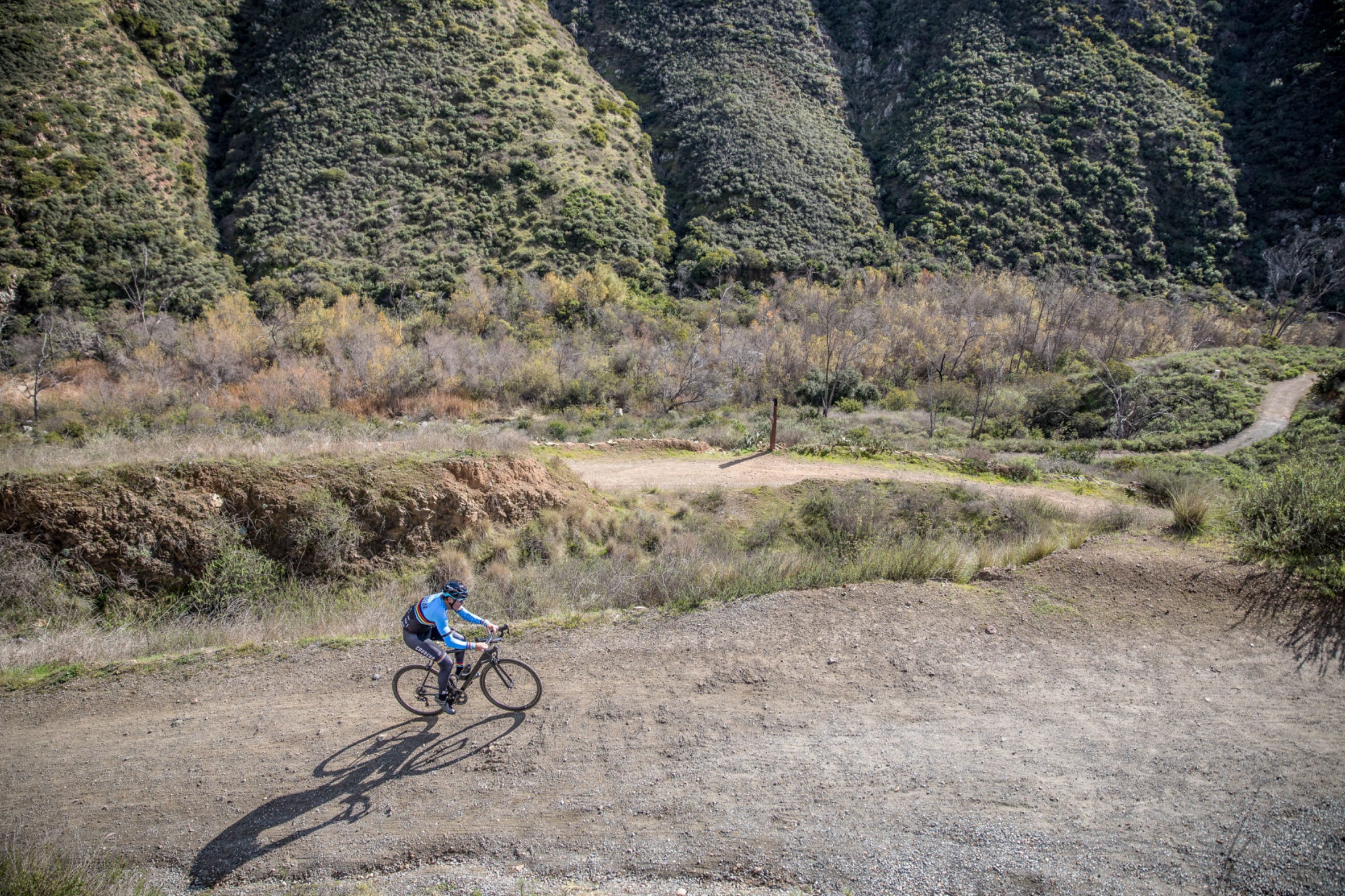
For years, I rode on Sunday mornings with the South Bay crew through the Santa Monica Mountains, eventually reaching one of Southern California’s great cycling landmarks: the top of Stunt Road. It is a beautiful climb, five and a half miles of steady work, gaining nearly two thousand feet from the canyon floor until it finally spills onto Mulholland Highway.
At the top, the road ends in a simple T-intersection.
Turn right, and Mulholland begins to roll and then descend. The hardest work is behind you. Gravity becomes your companion again, carrying you toward the coast and eventually home.
Turn left, and the ride asks another question.
Schueren Road tilts upward almost immediately, climbing toward Saddle Peak, as if the mountain were quietly asking whether you came all this way just to stop when the road became interesting.
Among the riders I admired most, there was never much discussion.
We turned left.
No one announced it. No one challenged anyone who preferred the easier road. It wasn’t a test of toughness or an attempt to impress one another. It was simply understood that if there was another climb to be ridden, that was where we were headed. The agreement had become so complete that it no longer felt like a decision.
Only later did I understand what those Sunday rides had been teaching me.
The climb itself was almost beside the point. The real lesson was that certain choices become easier once they stop being negotiated. By deciding before we reached the intersection, we spared ourselves the conversation that comfort is always eager to begin. The road still grew steeper. Our legs still protested. But our intention no longer had to compete with convenience.
That quiet little intersection in the Santa Monica Mountains has stayed with me far longer than any particular ride because it eventually escaped the bicycle. It became a way of thinking. Whenever life presented its own version of a T-intersection, one road promising relief and the other asking a little more of me, I found myself remembering those Sunday mornings and the riders who, almost without speaking, kept turning uphill.
Like many of the best cycling traditions, it sounds slightly absurd until you’ve lived with it long enough to discover it isn’t really about bicycles. Gravity already knows where easy lives. The climb rarely decides anything. It reveals decisions already made.
That is why I thought of Andrew Vontz.
Long before cancer entered his life, Andrew had already organized much of his thinking around a simple idea: hard things build stronger humans. Not because hardship is inherently noble, and certainly not because suffering should be sought for its own sake, but because the things that ask the most of us often reveal the parts of ourselves we didn’t know were there. That conviction became the foundation of his podcast, Choose the Hard Way, where over hundreds of conversations with athletes, entrepreneurs, military leaders, artists, and innovators, he has explored a remarkably consistent theme. The people who endure are rarely the ones who spend their lives looking for shortcuts. They are the ones who repeatedly choose the path that asks a little more of them than comfort would recommend.
Andrew has never treated “the hard way” as a slogan or a celebration of suffering. In fact, one of the things I admire most about his work is that it leaves room for joy. His guiding belief is not that hard things make us miserable. It is that hard things build stronger humans who ultimately have more fun. The distinction matters. This isn’t an argument for needless struggle or performative toughness. It is an argument that growth and delight often emerge from the same place, from saying yes to challenges that ask us to become a little larger than we were yesterday. That idea runs through every conversation he hosts, whether he’s talking with cyclists, business leaders, special operators, politicians, or comedians. Different lives. Different disciplines. The same quiet pattern. The people who become exceptional stop asking, “What’s easiest?” and begin asking, “What’s worth becoming?”
That conviction has become all the more profound as he faces the hardest climb of his life, a battle with cancer that no one would ever choose. Illness is not ennobling. Pain carries no automatic wisdom. There is nothing romantic about suffering. Yet there is something deeply revealing about the principles that survive it. A personal code is only a slogan until reality asks whether you still intend to live by it.
Ryan Holiday reminds us that obstacles are not interruptions to the path. They become the path itself. Marcus Aurelius understood the same truth centuries earlier. Neither was celebrating suffering. They were describing what difficulty reveals. The obstacle does not make us someone new so much as expose the person we have been quietly becoming all along.
Greg LeMond expressed the same truth with the blunt economy only an athlete could manage: “It never gets easier. You just go faster.” The climb does not become less steep. We become more capable instead, and that distinction changes everything.
The people who have most influenced my life have rarely chosen ease when purpose required effort. They paddled back out after frightening wipeouts. They returned to the trumpet after decades of silence. They trusted strangers when sight was no longer available. They rebuilt companies, marriages, identities, and dreams without any guarantee that the work would succeed. Although they came from different worlds and spoke different languages of success, they all seemed to live by the same unwritten rule.
When the road divided, they turned uphill.
None of them would have described it that way. Yet looking across their lives, I find myself returning to the same image. Again and again, when comfort and growth pointed in different directions, they chose growth.
Not because suffering is virtuous or difficulty deserves our worship, but because comfort has an extraordinary talent for disguising itself as wisdom.
The easier road is sometimes the wiser one, which is why discernment matters. Rest matters. Recovery matters. This is not an argument for making life unnecessarily difficult. It is an argument against allowing convenience to become an unconscious philosophy. Comfort is a wonderful place to visit. It is a dangerous place to build a life.
What separates extraordinary people is rarely talent. Talent may open a door, and opportunity may widen it, but character is what keeps us walking long after enthusiasm has faded. Character is often nothing more mysterious than a handful of decisions repeated until they become instinct, until they no longer require courage because they have become part of who we are.
Rush captured the same idea in Marathon: “It’s not the heat of the moment. It’s the pace of the race.” A meaningful life is rarely transformed by a single heroic decision. More often it is shaped by the quiet cadence of ordinary ones, repeated until they become indistinguishable from character.
Shaun Tomson never called it choosing the hard way. He simply began each promise with two words: I will.
There is remarkable wisdom hidden in those words. Shaun’s code makes no promises about outcomes. It says nothing about perfect waves, successful businesses, healthy children, or lives free from heartbreak. It concerns itself only with conduct. I will never turn my back on the ocean. I will always paddle back out. Before fear has an opportunity to negotiate, before disappointment begins arguing that today should be different, the decision has already been made. His code doesn’t eliminate uncertainty. It eliminates indecision.
Tomme Arthur lived by a different rule, though it pointed in much the same direction. Beer cannot be rushed. Fermentation has no interest in production schedules or quarterly goals. It unfolds according to its own mysterious intelligence, rewarding patience and exposing shortcuts with equal honesty. Tomme could have released good beer sooner. Instead, he waited until it became exceptional. Excellence, as he quietly demonstrated over decades, is usually built from hundreds of ordinary refusals to compromise.
Stanley Moss never seemed interested in selling products. Products were merely the vehicle. What he sold was possibility. Every conversation eventually arrived at the same question: does this enlarge the human being, or diminish them? That question complicated decisions. It slowed them down. It often required walking away from opportunities that looked profitable but felt hollow. Choosing the harder path was never the objective. Remaining faithful to the deeper mission was.
Jeremy Poincenot’s rule may have been the most counterintuitive of them all. After losing his sight, independence would have been the obvious prize to pursue. Jeremy discovered something richer. He chose trust. He accepted guidance. He invited other people into places where pride would have insisted on standing alone. What looked like dependence from the outside became a profound expression of courage. His life quietly argued that interdependence is not the opposite of strength. It is one of its highest forms.
Jim Moriarty rarely spoke about legacy, yet almost everything he built suggested he was thinking beyond himself. His decisions consistently favored stewardship over recognition. The easier road often promises applause. Stewardship usually asks for patience. It plants trees under whose shade someone else will someday sit.
As different as these people are, I no longer hear their stories separately. I hear variations on the same melody.
“I will.”
Earn your turns.
Wait until it’s ready.
Sell possibility.
Accept the guide.
Plant trees.
Different words. Different professions. Different lives.
The same quiet commitment.
None of these people chose the harder road because hardship possessed some magical virtue. They chose it because they had already answered a more important question. They had decided who they intended to become, and once that decision had been made, many of life’s smaller choices ceased to feel like choices at all. They became expressions of identity.
Perhaps that is what every worthwhile code has always been.
Not a collection of rules.
A way of reducing the distance between what we believe and how we behave.
We often imagine that character is revealed in life’s defining moments. There is truth in that, but only part of it. Defining moments rarely create character. More often they expose the character that has been quietly assembled through hundreds of smaller decisions no one else ever noticed. The public test simply reveals the private practice.
That may be why the people in this book have stayed with me for so many years. They did not become remarkable because they occasionally rose to extraordinary moments. They became remarkable because they practiced being the same person on ordinary Tuesdays as they hoped to be when life eventually demanded everything they had.
That is a much harder way to live.
It is also, I suspect, the only way that endures.
Which leaves me wondering about the rest of us.
Every life eventually writes its own rules, whether we intend to or not. We imagine we are making isolated decisions, but over time those decisions begin making us. The promises we keep, the compromises we tolerate, the conversations we avoid, the standards we refuse to lower, the ways we respond when no one is watching. Together they become a kind of unwritten constitution, shaping our character long before we ever think to describe it.
The interesting question isn’t whether we live by a code.
We all do.
The question is whether it is one we chose consciously or one we accepted by default.
What rules is your life already revealing, whether you intended to write them or not? Your life has already been writing its own constitution. The question is whether you’ve ever stopped to read it.
If someone watched you for a year without ever hearing you explain yourself, what would they conclude were your non-negotiables? What would they believe you worshipped? What would they assume you feared? Which promises would seem unbreakable, and which values would appear negotiable?
Every commitment leaves a mark. Over time those marks become habits, habits become character, and character quietly begins making decisions before we know we’re making them.
The summit, I’ve come to believe, is never really the point. The point is becoming the sort of person who, when the road unexpectedly forks, already knows which way to turn.
The remarkable thing is that these moments rarely announce themselves. Life seldom says, This is the decision that will define you. More often, it arrives disguised as an ordinary Tuesday, an uncomfortable conversation, a chance to compromise, or an invitation to quit a little earlier than we know we should. Character is assembled there, almost invisibly, long before anyone notices.
The road eventually divides for all of us. Sometimes one direction promises comfort while the other asks for courage. Sometimes one protects our pride while the other requires humility. Sometimes one preserves certainty while the other demands faith. By the time those moments arrive, the decision has often been years in the making, quietly rehearsed through countless smaller choices that gradually became the architecture of a life.
That may be the deepest lesson hidden inside an old piece of cycling folklore. The climb rarely changes us. More often, it reveals the promises we have already made to ourselves.
Yet every worthwhile code eventually reaches a place where determination alone is no longer enough. There are climbs too steep for resolve alone, losses too heavy to carry in isolation, and moments when the hardest choice is no longer turning uphill, but allowing another person to help carry the journey.
It is one thing to keep your own commitments.
It is something altogether different to trust someone else with them.
Some climbs can only be made together.
#Character #Leadership #Commitment #Cycling #ChooseTheHardWay